
The Value of Investing in Interior Architecture & Design
Why Thoughtful Design Pays Off in Both Residential and Commercial Spaces
Interior architecture and design are often viewed as aesthetic enhancements—something to consider after the structure is complete. In reality, investing in interior design early and intentionally has a measurable impact on how a space functions, performs, and retains value over time.
Whether residential or commercial, interior architecture is not about decoration. It is about how people move through a space, how materials perform, and how design decisions support daily use, efficiency, and longevity.
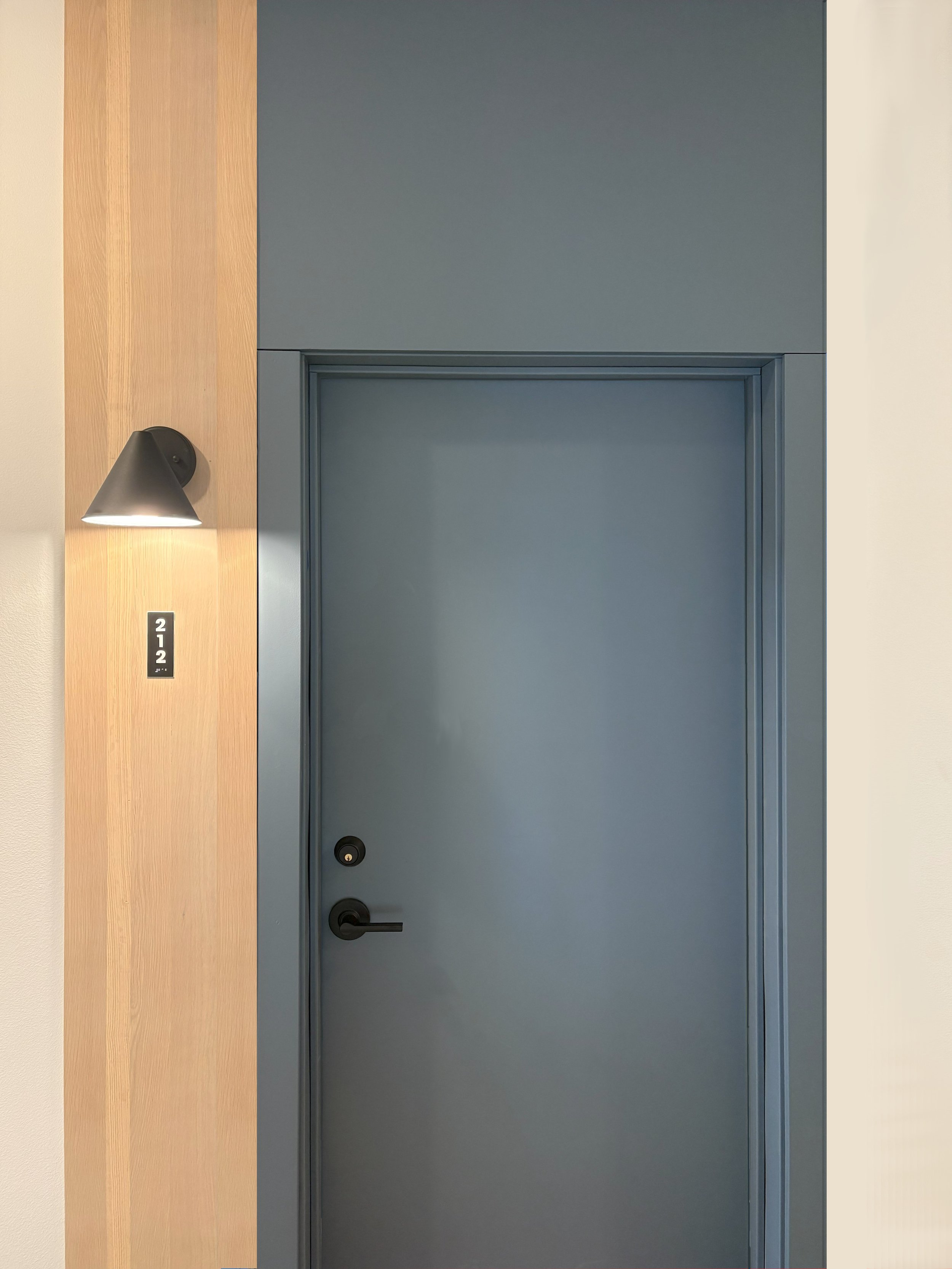
Create intimate moments
Architecture protects you from the elements and interior design makes you feel some sort of way. Even the smallest moments like the entry into your client’s apartment, means something. In a multi-story building where most units are carbon copies, thoughtful design to make each entry feel welcoming and warm is what makes it home. In this 20-unit multi-use project, DEYO highlighted each entryway with its own illuminated door number fixed to a warm white oak slab.
Interior Design as a Strategic Investment
At its core, interior architecture bridges structure and experience. Decisions related to layout, ceiling conditions, lighting, and built-in elements shape how a space is used long before furniture or finishes are introduced.
When these elements are thoughtfully planned, they:
Improve functionality and circulation
Reduce inefficiencies and wasted square footage
Support durability and ease of maintenance
Minimize costly changes during construction
Design that is integrated early allows projects to move forward with clarity—benefiting both owners and builders. You wouldn’t bake a cake without a recipe and you wouldn’t build a structure without a solid design and the right contractors to make it happen.
Residential: Long-Term Value Beyond Aesthetics
In residential projects, interior architecture directly impacts daily living. Thoughtful layouts, appropriate material selections, and coordinated lighting plans improve how a home feels and functions over time.
Investing in interior design during the planning stages allows homeowners to:
Avoid compromised layouts and awkward transitions
Create cohesive material palettes that age well
Ensure cabinetry, lighting, and millwork are designed for real use
Support future resale value through timeless, well-executed decisions
Rather than layering design on after construction, early involvement allows interiors to feel intentional and integrated—resulting in homes that function better and retain long-term appeal. If you think a designer pulls a floor plan out of thin air, first-try— you’re mistaken, and I wish it was that simple. Designers spend valuable time laying out and space planning the perfect map for their clients. A good designer has the ability to mentally walk through their design and pin point what needs to shift or flip in order to maximize flow and user experience.
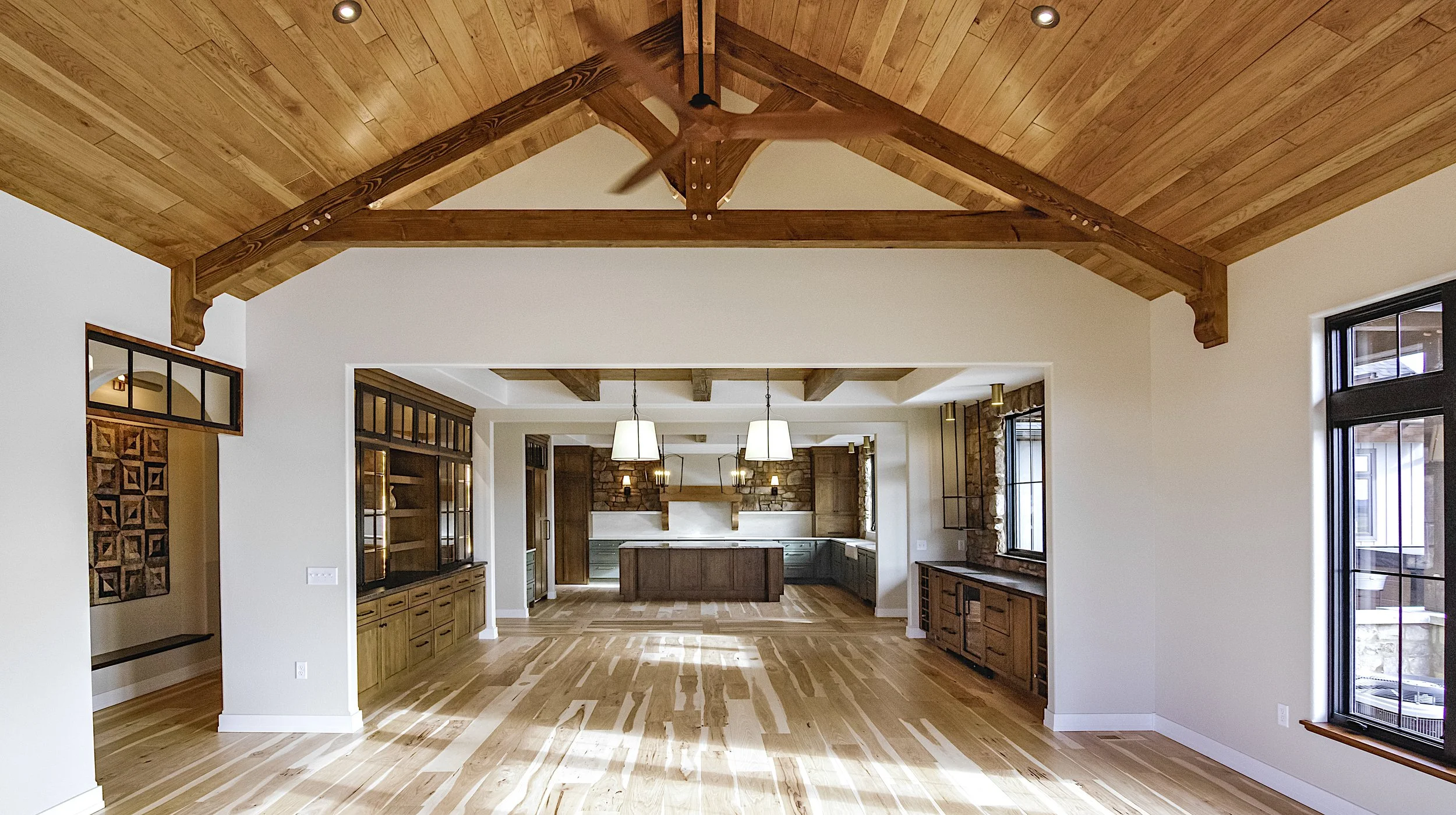
one designer, one set of plans
Designing this home from the ground up, as well as providing interior architecture and design services, DEYO was able to ensure everything was ready when the contractor was: lights were centered between beams, cabinets fit the walls, and clients got renderings of what it would look like before pulling the trigger.
Commercial: Performance, Efficiency, and Brand Alignment
In commercial environments, interior architecture and design directly influences performance and perception. From circulation and lighting to durability and maintenance, interior design decisions affect how efficiently a space operates and how it is experienced by users and visitors.
Well-designed commercial interiors:
Support workflow and spatial clarity
Reduce long-term maintenance and replacement costs due to initial strategy of designing for the future
Reinforce brand identity through cohesive design
Improve user comfort, productivity, and retention
For developers and business owners, integrating well-thought interior design into your business plan harvests a long-term investment to keep clients comfortable, intrigued, and coming back. Think: How do I want my clients to feel and look back at their experience?
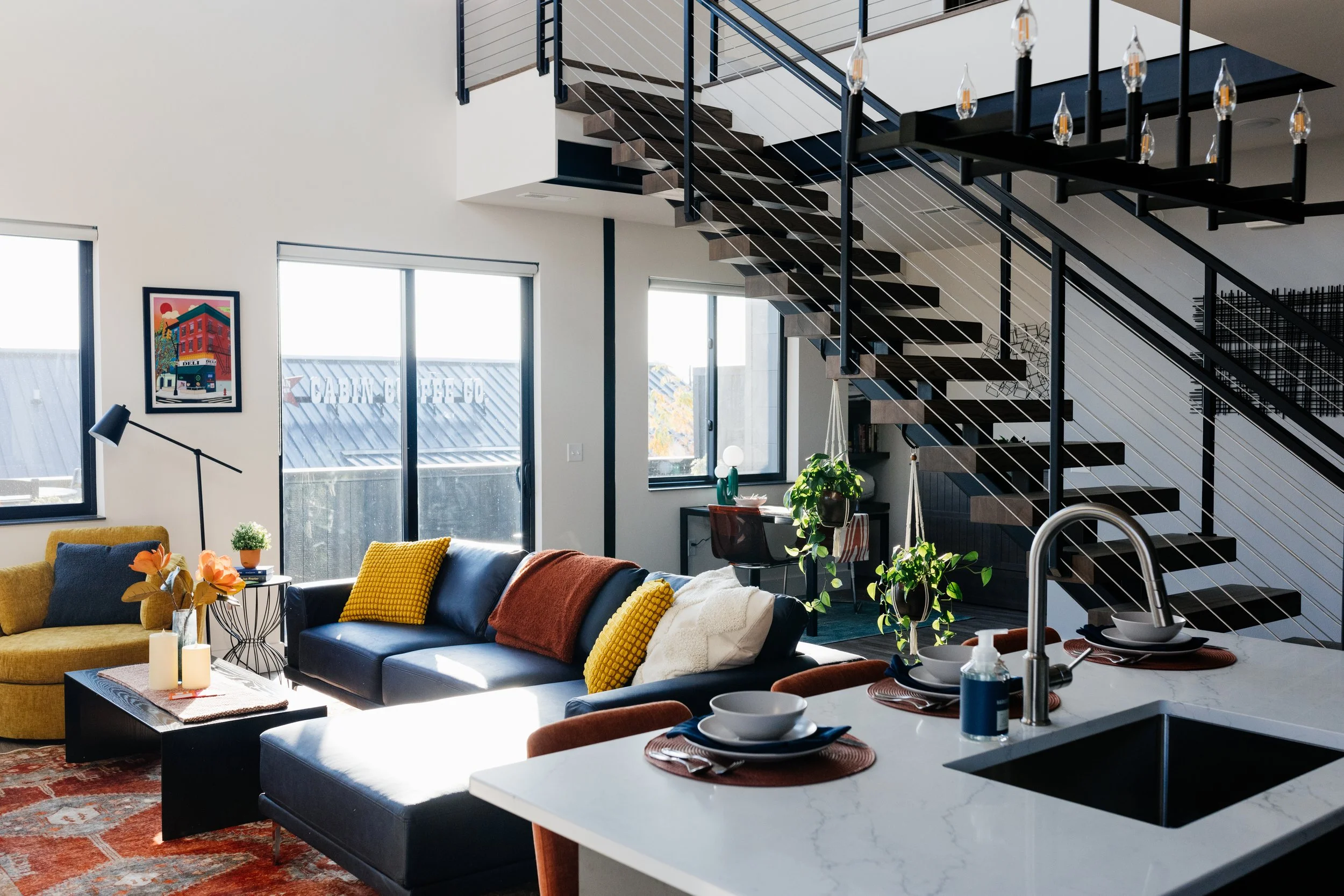
FURNISHING MODELS
This client wanted two of the five units in this multi-use project furnished for short term rentals. The building, designed in collaboration with DEYO and furnished by DEYO allowed for a cohesive end product that showcased how an urban loft style apartment could look from architecture to furnishings. At the end of the day, you’re selling a lifestyle to your clients and a white box is…a white box. Models help to accentuate how a space can feel to a potential client.
Early Design Reduces Costly Changes Later
One of the most overlooked benefits of interior architecture and design is cost control. When layouts, lighting, and built-in elements are resolved early, projects experience fewer changes during construction—when adjustments are more expensive and disruptive.
Integrated design documentation allows contractors and fabricators to price accurately and build with confidence, reducing uncertainty for all parties involved.
A Cohesive Approach from Concept to Construction
At DEYO Design Co., interior architecture and design are approached as part of a cohesive process—not as a final layer. By coordinating architectural planning and interior design together, we ensure decisions are intentional, build-ready, and aligned from the start.
This approach benefits both residential and commercial projects by creating spaces that are not only visually refined, but also practical, durable, and thoughtfully executed.
Final Thoughts
Investing in interior architecture and design is not about adding excess—it is about making informed decisions that improve functionality, efficiency, and longevity. Whether designing a home or a commercial environment, early and intentional design planning leads to better outcomes during construction and beyond.
